
Lifting Equipment
Control Solutions
Integrated Control Systems for Lifting Equipment OEMs
Update outdated lift controls. Simplify wiring. Scale platforms with confidence.
Lifting equipment OEMs are being asked to modernize aging electrical systems, reduce wiring complexity, improve serviceability, and build more scalable platforms across increasingly complex equipment families.
HED helps OEMs design rugged, CAN-based control systems for tower cranes, mobile cranes, telehandlers, boom lifts, scissor lifts, forklifts, and other lifting equipment platforms. Our controllers, displays, keypads, I/O, and system integration support help OEMs replace outdated hardwired systems, reduce wiring complexity, scale control platforms across equipment families, and improve operator and service-team visibility in demanding environments.
Talk to HED about modernizing your lifting equipment controls
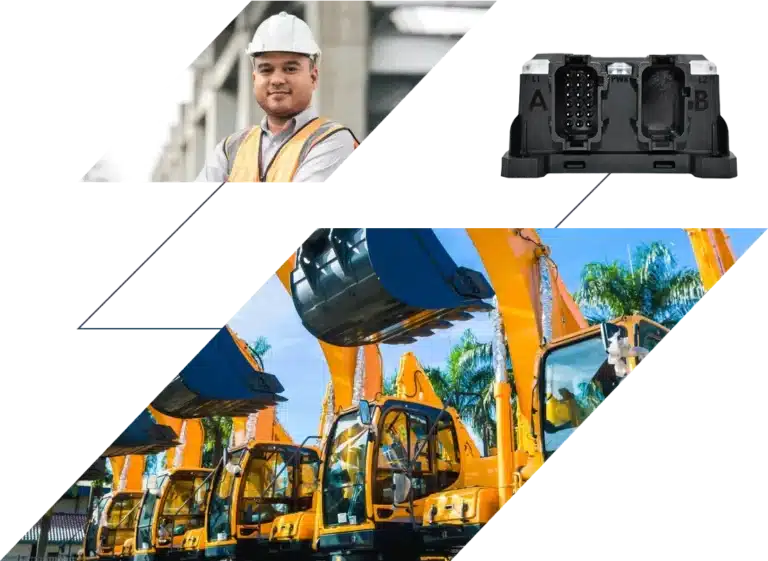
Four Control Priorities for Modern Lifting Equipment
Modern lifting equipment depends on more than rugged components. OEMs need control architectures that can replace outdated hardwired approaches, simplify electrical design, scale across machine families, and help operators and service teams understand how the machine is responding.
HED supports those priorities with integrated electronics and application support built for demanding mobile equipment environments.
-
Modernized Control Architecture
Replace relay-heavy, hardwired systems with connected control architecture that makes lift functions easier to configure, diagnose, update, and support. -
Simplified Electrical Architecture
Reduce harness bulk, connector count, routing complexity, assembly variation, and hardwired redesign by moving more capability into CAN-based modules and configurable logic.
-
Scalable Product Platforms
Reuse shared control strategies across cranes, telehandlers, lifts, forklifts, and specialty platforms while still allowing application-specific configuration. -
Lift Function Performance
Improve operator confidence with smoother function coordination, clearer feedback, better visibility into machine states, and faster diagnosis of performance-related issues.
A Control Architecture Built Around Your Priorities
HED helps OEMs replace fragmented, outdated electrical systems with integrated control architectures designed around the specific demands of lifting equipment.
Instead of adding more relays, wiring, and one-off circuits as machine capability grows, HED helps OEMs bring controls, displays, keypads, distributed I/O, diagnostics, and CAN-based communication into a cleaner machine-control foundation.
With HED, OEMs can:
- Replace outdated hardwired logic with a more integrated, diagnosable control architecture
- Simplify electrical architecture with CAN-based communication and distributed I/O
- Reduce wiring, harness complexity, connector count, and assembly variation
- Scale reusable control platforms across equipment families, variants, and option packages
- Improve lift function performance through clearer operator feedback and coordinated machine logic
- Support diagnostics that help service teams identify control, sensor, I/O, and communication issues faster
- Reduce redesign when adding new features, attachments, regional requirements, or machine configurations
- Create a stronger foundation for future software, telematics, remote support, and platform updates
The Engineering Challenge: More Capability, More Complexity
For lifting equipment engineers, controls complexity rarely comes from one major design decision. It usually builds over time — one added function, option package, machine variant, or field update at a time. That can create real pressure across the full machine lifecycle.
- Wiring systems that are hard to route, test, and troubleshoot: More point-to-point wiring increases harness complexity, assembly variation, and potential failure points.
- Limited visibility when something goes wrong: Without built-in diagnostics, technicians often spend too much time tracing wires, checking connections, and isolating faults manually.
- Machine variants that create repeated engineering effort: Different boom configurations, attachment packages, platform options, regional requirements, and model sizes can lead to repeated redesign.
- Outdated hardwired logic that becomes harder to update: As lift functions, interlocks, operator inputs, and machine feedback expand, fragmented systems make changes slower and less repeatable.
- Pressure to improve uptime without adding complexity: OEMs need machines that are easier to build, easier to support, and easier to evolve over time.
Read: Reduce wiring complexity across lifting equipment electrical architecture
Connect with HED to simplify the electrical architecture behind your next lift platform
When Lifting Equipment Controls Need to Do More
Lifting equipment has to coordinate operator input, lift movement, interlocks, hydraulic or electric functions, machine feedback, diagnostics, and platform options across demanding working environments.
As equipment families become more configurable, HED helps OEMs build control systems that are easier to wire, easier to scale, and easier for operators and service teams to understand.
Read: Improve lift function performance and operator confidence
Tower Cranes
- Hoist, trolley, and slewing control coordination
- Operator status feedback
- Limit-state monitoring
- Sensor and switch diagnostics
Mobile Cranes
- Outrigger and stabilization logic
- Boom positioning and enable logic
- Setup sequencing and operator prompts
- Hydraulic and machine-state coordination
Telehandlers
- Boom function control
- Attachment coordination
- Stabilizer and frame interlock logic
- Operator display and fault visibility
Boom Lifts and Scissor Lifts
- Platform and chassis function coordination
- Machine-state interlocks
- Warning and status indicators
- Diagnostics for service teams
Forklifts
- Lift, lower, and tilt control logic
- Operator interface integration
- Machine-status visibility
- Reduced wiring complexity across core functions
Build for Today’s Needs — and Tomorrow’s Requirements
The next generation of lifting equipment will require more than rugged hardware. OEMs need control systems that can support more machine intelligence, more flexible configurations, stronger diagnostics, and easier platform evolution.
HED helps OEMs build that foundation.
Whether you are developing tower cranes, mobile cranes, telehandlers, boom lifts, scissor lifts, forklifts, or specialized lifting platforms, HED can help simplify the control system behind the machine.

From Hardwired Complexity to Integrated Control
Traditional electrical approaches may work for basic machine functions, but they often become harder to manage as lifting platforms evolve.
Traditional Approach
- Custom relay logic
- More point-to-point wiring
- Limited diagnostics
- Slower troubleshooting
- More engineering effort for variants
- Harder upgrades over time

With HED
- Integrated CAN-based controls
- Simplified machine architecture
- Built-in diagnostics
- Faster fault isolation
- More configurable platforms
- Cleaner path to future functionality
Why Lifting Equipment OEMs Choose HED
HED brings together rugged vehicle electronics, application knowledge, and system-level controls support to help OEMs modernize lifting equipment controls, simplify electrical design, improve serviceability, scale platforms, and make machine behavior easier for operators and service teams to understand.
-
Modernized Control Architecture
Controls support for replacing relay-heavy, hardwired systems with connected architecture that is easier to configure, diagnose, update, and support over the life of the platform. -
Simplified Electrical Design
CAN-based controllers, distributed I/O, displays, keypads, and diagnostics that help reduce hardwiring, harness bulk, and assembly variation.
-
Scalable Platforms for Equipment Families
Reusable control strategies that can support multiple equipment types, model sizes, option packages, attachments, and future feature updates. -
Operator Confidence and Lift Performance
Clearer feedback, coordinated lift logic, and better diagnostic visibility help operators and technicians understand machine behavior faster.
Ready to Build a Cleaner, More Scalable Lifting Equipment Platform?
Let’s talk about how HED can help you modernize outdated controls, reduce wiring complexity, scale control platforms, and improve operator and service-team visibility across your lifting equipment family.