
Utility & Municipal Vehicles Leave No Room for Fragile Electrical Architecture
Utility and municipal vehicles operate in environments that punish electrical systems. Vibration, salt, moisture, road spray, dust, debris, heat, cold, washdown, and long duty cycles can all increase the importance of clean architecture, rugged components, and serviceable design.
For OEMs, reliability starts long before the vehicle reaches the fleet. It starts with how the electrical system is designed.
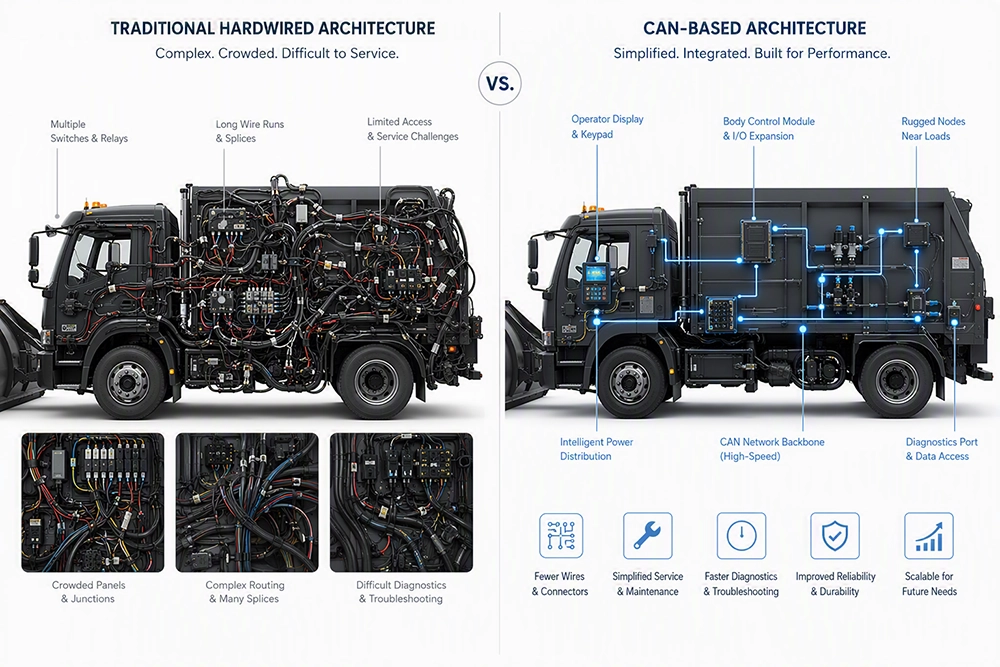
What OEMs Need to Solve
- Long harness runs across chassis, frames, booms, bodies, hoppers, tanks, pump panels, and control panels can create reliability, inspection, and service-access challenges.
- Dense point-to-point wiring can make vehicles harder to build, troubleshoot, and update as features change.
- Salt, moisture, vibration, debris, temperature extremes, and washdown can expose weaknesses in connectors, routing, protection, and packaging.
- Distributed control architecture can reduce unnecessary wiring and improve system organization.
- Better diagnostic visibility can help service teams isolate faults faster when vehicles need to return to service quickly.
Why It Matters
In municipal and utility work, downtime is highly visible. A vehicle fault can affect snow response, refuse collection, utility maintenance, street cleaning, or water-handling operations. Reliability is not only about rugged parts. It is also about designing an electrical architecture that reduces unnecessary complexity from the start.
HED’s Approach
HED supports rugged utility and municipal vehicle design with control modules, distributed I/O, displays, CAN keypads, and power distribution solutions built for demanding mobile environments. By helping OEMs move control closer to function areas and organize communication through a CAN-based architecture, HED can reduce wiring complexity, improve service access, and support more reliable electrical system design.
Key Takeaway
Electrical reliability improves when OEMs reduce unnecessary wiring complexity, organize control architecture, and design for service visibility from the beginning.
Design a More Reliable Utility & Municipal Vehicle Architecture