
Earthmoving Equipment
Control Solutions
Smarter Control for Construction's Biggest Movers
Earthmoving equipment such as Excavators and Dozers is expected to do more than ever: support more operator features, integrate more machine functions, provide clearer diagnostics, and adapt to changing platform requirements. But many OEMs are still building on electrical systems that become harder to scale as machine capability grows.
HED helps earthmoving OEMs move from fragmented hardwired designs to CAN-based control systems that simplify integration, support diagnostics, and create a stronger foundation for future-ready machine platforms.
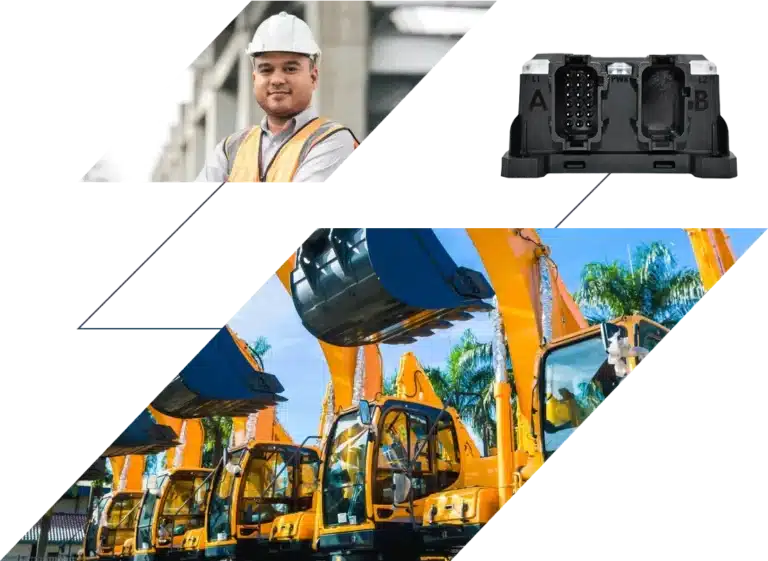
Why Legacy Electrical Systems Can Fall Short
Most earthmoving equipment still rely on hardwired or relay-based architectures that become more difficult to manage as machine functionality expands.
As control logic, operator interfaces, interlocks, and machine features increase, legacy electrical designs add engineering burden, complicate production, and make platform evolution harder to support.
- Hardwired systems become harder to scale as functions and options grow
- More wiring complexity creates more integration effort and more opportunities for failure
- Limited diagnostics make troubleshooting slower when uptime matters most
- Future upgrades can require disruptive redesign instead of manageable expansion
Built for the Demands of Construction's Big Equipment
Earthmoving machines must coordinate operator inputs, machine status, hydraulic or implement logic, and application-specific outputs in harsh environments. HED helps OEMs bring those functions together in a more scalable and serviceable controls architecture.
- Operator interfaces, displays, and machine feedback
- Implement control, interlocks, enable logic, and status-based control
- Lighting, alarms, cameras, and auxiliary functions
- Diagnostics and service visibility across machine functions
Excavators
For excavators, that can include operator displays, keypads, work modes, camera integration, lighting, engine and machine status feedback, attachment-related controls, and other machine interface functions.
Loaders
For loaders, it can include bucket and attachment controls, operator displays, machine status feedback, lighting, payload or work-cycle visibility, interlocks, and the interface functions that help operators work efficiently in demanding jobsite conditions.
Dozers
For dozers, it can include blade-related functions, work mode selection, operator feedback, lighting, machine-state logic, and the integration points that support more advanced control strategies.
Why OEMs Choose HED
HED delivers rugged CAN-based control systems with a full product suite that helps construction equipment OEMs move beyond component-by-component integration.
From defining the control architecture and selecting hardware to developing application software, integrating machine functions, and supporting validation for production, our Applications team works as an extension of your engineering team to create more integrated machine architecture.
- HED provides full-system design support to help construction equipment OEMs create cohesive machine platforms that:
- Simplify electrical architecture across the machine
- Reduce wiring and integration complexity
- Support diagnostics, serviceability, and future expansion
- Create a stronger platform for machine variants and evolving features
HED helps OEMs reduce harness complexity, standardize architecture, and support advanced vehicle functions without expanding internal controls burden.
- Extend internal engineering resources with application support for new and existing construction equipment platforms
- Support faster, more repeatable machine builds
- Create a more scalable platform for future variants and options
Read: Bottom-line impact of simplifying electrical architecture
Modern earthmoving machines require a controls architecture that can coordinate operator inputs, machine state, diagnostics, and future feature additions without repeated redesign.
- Support integrated control across key excavator and dozer functions
- Improve visibility through built-in diagnostics and status feedback
- Make it easier to add or adapt capability over time
A better controls architecture does more than simplify design. It helps reduce failure points, speed fault isolation, and keep machines available for productive work.
- Reduce troubleshooting and service time
- Improve serviceability through better diagnostics
- Lower lifecycle complexity across the machine platform
A Clearer Path Forward
Traditional electrical systems become harder to manage as excavators and dozers become more capable. HED helps OEMs move to an integrated controls approach built for scalability, diagnostics, and long-term platform support.
Traditional Approach
- Custom relay or hardwired logic
- Increasing wiring complexity
- Limited diagnostics
- Slow troubleshooting
- Difficult upgrades

With HED
- Integrated control system
- Simplified architecture
- Built-in diagnostics
- Faster troubleshooting
- Platform for future innovation
Why HED
HED combines rugged products, full-system controls expertise, and application support to help earthmoving OEMs design more capable machines with less integration risk.
- Rugged controllers, displays, and keypads designed for demanding mobile environments
- Full-system design support—from architecture and hardware selection through application development, integration, and validation
- Long-term product and application support for extended equipment lifecycles

Related Equipment Control Topics
For OEM teams evaluating earthmoving equipment control architecture, these supporting pages take a deeper look at common engineering challenges behind hydraulic coordination, rugged reliability, platform scalability, and serviceability.
Planning Your Next Equipment Platform?
If you are looking to simplify electrical architecture, support more advanced machine functions, or reduce integration risk on your next earthmoving program, HED can help.
Let’s discuss how an integrated controls approach can support your machine architecture, production goals, and long-term platform strategy.