
Reducing harness complexity removes common failure points such as excess splices, long routing paths, crowded pass-throughs, and hard-to-trace point-to-point wiring. When that simpler architecture is combined with intelligent electronics and built-in diagnostics, both OEMs and end customers gain faster fault isolation and more productive machine uptime.
-
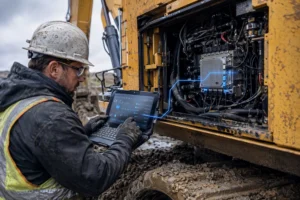
Built-in diagnostics help technicians isolate faults faster and reduce machine downtime. Reduced harness complexity improves reliability by lowering opportunities for intermittent faults, rub-throughs, corrosion-related issues, and installation errors.
- Built-in electronics speed diagnosis. Instead of tracing wires across the machine, service teams can identify the affected module, function, or circuit faster.
- Diagnostics help prevent larger failures by identifying abnormal conditions earlier and giving operators or technicians clearer visibility.
- Earlier detection supports faster, lower-cost repairs by reducing troubleshooting time and helping service teams address issues before full failure occurs.
- Better uptime improves customer confidence because the machine spends more time working and less time waiting on electrical troubleshooting.
For excavators and dozers, uptime depends on more than rugged hardware. It also depends on electrical architecture that helps the machine communicate, protect itself, and be serviced faster.