
Protect critical controls from vibration, shock, dust, moisture, washdown, chemicals, and temperature extremes.
Road building equipment operates through long duty cycles in environments that expose electronics to constant vibration, repeated shock, asphalt dust, water, pressure washing, chemicals, and rapid temperature changes. Durable control-system design starts by matching every controller, display, keypad, connector, and mounting location to the machine’s actual environmental demands.
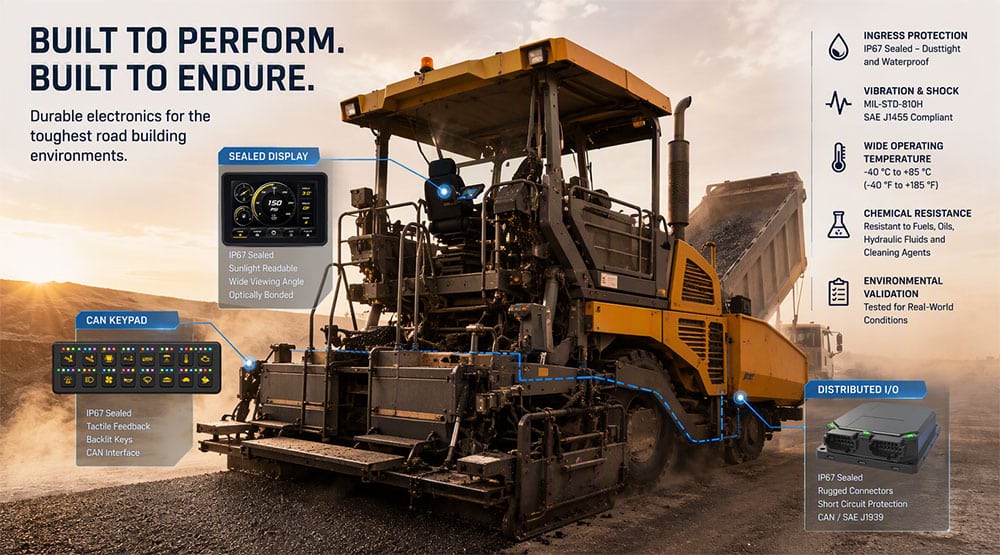
- Define ingress-protection requirements for each installation zone, including dust, rain, spray, temporary immersion, and high-pressure washdown exposure.
- Select controllers, displays, keypads, connectors, and distributed I/O that are designed and validated for sustained vibration and repeated mechanical shock.
- Verify operating-temperature range and thermal-cycling performance for cold starts, engine-compartment heat, direct sun, and seasonal extremes.
- Account for chemical exposure from fuel, hydraulic fluid, cleaning agents, road salt, asphalt-related contaminants, and other jobsite materials.
- Protect harnesses and connectors through shorter runs, secure routing, strain relief, sealed interfaces, and distributed control near high-function machine zones.
- Use documented environmental validation—including ingress, vibration, shock, temperature, chemical, and electromagnetic testing—to reduce field risk before production.
For road building OEMs, durability is a system-level requirement—not a single component claim. Matching IP protection, vibration and shock resistance, operating-temperature range, chemical resistance, mounting, and harness design to real machine conditions helps reduce intermittent faults, premature failures, warranty exposure, and avoidable downtime.
Read More: Consistent Paving Performance