
Forestry Electronics Must Survive the Environment, Not Just Control the Machine
Forestry equipment works in conditions that expose every weakness in an electrical system. Shock, vibration, mud, water, dust, wood debris, branch strikes, temperature swings, and continuous duty cycles can turn a small design compromise into a field failure.
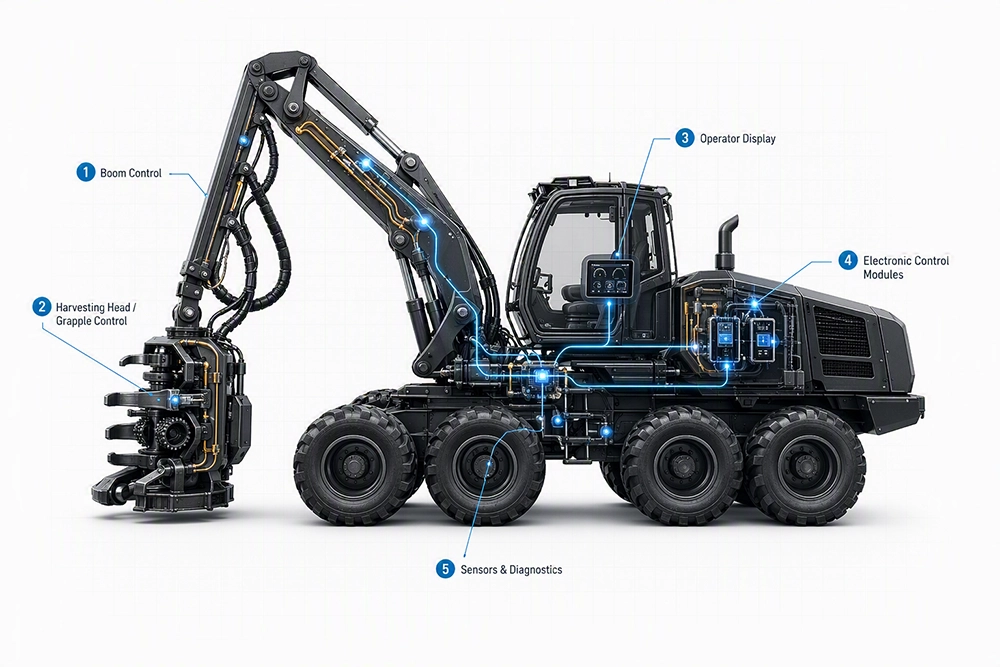
For OEM engineers, the challenge is designing rugged electronics as part of the machine architecture from the beginning, so controls, operator interfaces, connectors, harness routing, and diagnostics are all built for extreme forestry conditions.
What OEMs Need to Solve
Harsh-environment design is more than selecting sealed components. OEMs need to consider where electronics are mounted, how wiring is routed, how connectors are protected, and how the system will be diagnosed when the machine is far from a shop.
- Protect control modules, displays, keypads, sensors, connectors, and distributed I/O from shock, vibration, moisture, dust, heat, cold, and forestry debris.
- Reduce exposed harness length through booms, frames, engine compartments, and moving structures where abrasion and impact risk are higher.
- Place distributed control closer to function areas to simplify wiring and reduce failure points.
- Improve packaging, service access, and diagnostic visibility so technicians can identify issues without excessive disassembly.
- Design electronics around real forestry use cases, including long shifts, remote operation, rough terrain, and high-abuse duty cycles.
Why It Matters
In forestry, reliability is not only a component specification. It is a system-level design requirement. When electronics are not protected from the environment, OEMs risk more warranty claims, longer troubleshooting events, and lower confidence from operators who depend on the machine every day.
HED’s Approach
HED helps OEMs design rugged CAN-based control architectures using control modules, distributed I/O, displays, and CAN keypads built for demanding mobile machine environments. By organizing electronics around machine function areas and service needs, HED helps reduce wiring exposure, simplify diagnostics, and support more reliable machine operation in harsh forestry conditions.
Create a Simplified Controls Platform with HED
Whether you’re designing a new platform or evolving an existing one, a system-level review can help identify opportunities to simplify and reduce integration risk. Request a System Architecture Review